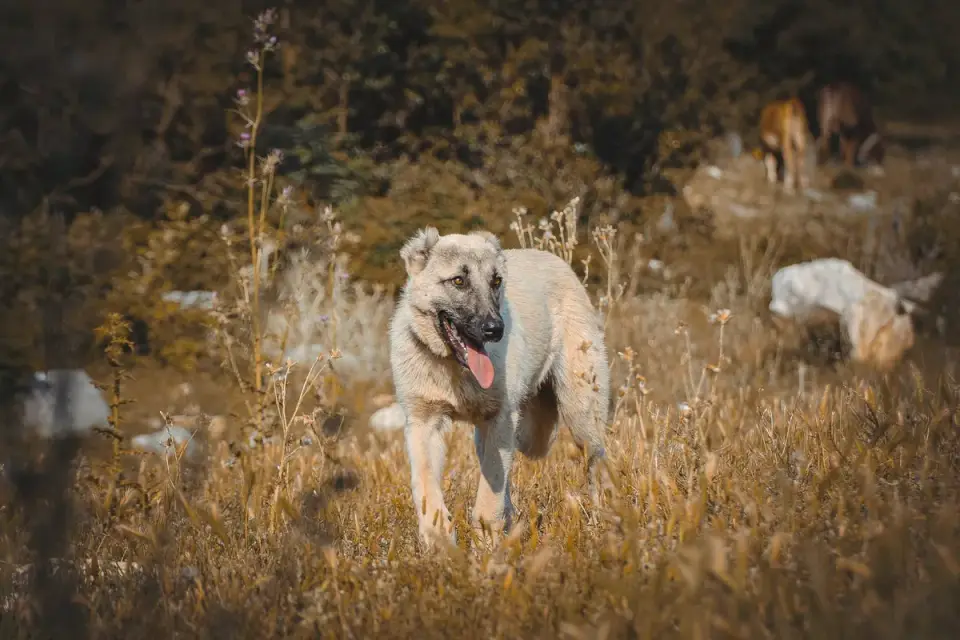
Amy noticed it on the short evening loop around Garden Grove, the one Abbey had walked for years. Her 10-year-old spayed Cane Corso, 108 pounds and gray around the muzzle, started pausing at the second corner and shifting her weight before sitting down. On damp 52-degree nights she shivered faintly through her thinning flank coat, then took three minutes to rise from her bed afterward.
That pattern is why I land where I do: for most senior large breeds, a well-fitted coat or sweater is preventive care, not decoration. It helps maintain core warmth when muscle mass, coat density, and circulation have declined, which may help support more willing movement on cold days.
Vets often see the same tradeoff in winter. Owners worry about coddling a big dog, so they skip the coat, and the dog quietly shortens walks and stiffens overnight.
Why aging changes how big dogs hold heat
Senior dogs lose insulation from two directions. Sarcopenia trims the muscle that generates heat, while many older Labradors, Shepherds, Goldens, and giant breeds grow a thinner, slower-regrowing undercoat. Lower body fat and slower peripheral circulation complete the picture.
The result is not disease, but physics. Less insulation plus a large surface area means faster heat loss, especially in wind, rain, and after swimming or bathing. A damp coat pulls heat away far faster than dry air, which is why American Veterinary Medical Association guidance on cold-weather animal safety emphasizes dry shelter, limited exposure, and attention to shivering and slowed movement.
Warmth matters for mobility, too. Cold does not cause osteoarthritis, but stiffness often looks worse after cold rest, and soreness can shorten activity. VCA Hospitals notes that arthritis signs in dogs include stiffness, lagging on walks, and difficulty rising, all behaviors owners report more often in winter.
Expectation first: a coat will not rebuild cartilage or reverse aging. It may help support comfort and routine, which keeps the rest of the longevity plan working.
What I recommend, and what I would skip
My recommendation is simple. Use clothing as a warmth tool for senior big dogs when temperatures drop, wind rises, rain soaks through, or recovery after exercise looks slow.
Choose coverage over bulk. Look for a coat that covers neck to tail base, leaves the legs and belly strap free for a full stride, and closes without pulling across the shoulders. Water-resistant outer fabric with a smooth inner lining works for most California winters; heavy expedition parkas are overkill unless the dog is very lean, very arthritic, or out for long periods.
Fit decides whether clothing helps or harms.
Measure chest girth behind the elbows, back length from withers to tail base, and neck loosely. You should fit two flat fingers under every strap and see no chafing at the armpits after a 20-minute walk. If the dog freezes, ducks, chews the Velcro, or shortens stride in the coat, the fit is wrong.
A baseline winter wardrobe that earns its keep
A light fleece sweater covers cool indoor mornings and short potty breaks. A water-resistant walking coat covers wind and rain. A drying robe or towel coat after baths helps large dogs that air-dry slowly.
That is enough for most households. Boots, snoods, and full leg suits can help specific dogs, but they add handling stress and fit problems, so I add them only for a clear reason such as cracked pads or a post-groom chill.
Owners managing double coats can find background on insulation in Keeping Double-Coated Breeds Comfortable in Hot Weather, and households weighing temperament and routine may like Best Low-Maintenance Dog Breeds for Busy People.
The fair counterargument, and why warmth still wins
The best reason to skip clothing is that many healthy, dense-coated large breeds thermoregulate well without help. An intact double coat traps air efficiently, and overdressing a warm dog can cause panting, restlessness, and skin dampness under the fabric.
I take that seriously. I do not recommend coats for every big dog on every day.
But seniors are a different baseline. When Amy added a midweight walking coat for Abbey, the observable change was distance and recovery: the same half-mile loop with one pause instead of three, and rising in under a minute the next morning. Clothing did not fix joints. It lowered the thermal cost of the walk.
Keep it preventive. Put the coat on before the walk, not after shivering starts. Remove it indoors once the dog is dry. Wash it often enough that the lining stays soft and odor-free, and recheck fit monthly because weight shifts quickly in older giants.
For devoted owners, that is the longevity logic: protect the walk, and you protect muscle, weight, mood, and sleep.
Frequently asked questions
At what temperature does a senior large dog need a coat?
There is no single cutoff. Consider a coat below about 45°F for lean or arthritic seniors, sooner with wind, rain, or shivering, and remove it if the dog pants or seems restless.
Can clothing help a stiff older dog move better?
Warmth may help support comfort and willingness to walk, but it does not treat arthritis. Keep walks consistent, watch for lagging or difficulty rising, and ask your veterinarian about a joint and pain plan.
How should a coat fit a big dog?
Cover neck to tail base, allow full shoulder and leg movement, and keep two fingers of room under straps. Check the armpits for rub marks after the first few walks.
Sources
- Cold-Weather Animal Safety — American Veterinary Medical Association
- Arthritis in Dogs — VCA Hospitals