Doodle vs Purebred Poodle: What's the Difference
The real doodle vs poodle difference isn't the curls, it's how predictable that dog will be for the next twelve years.
On this page
A woman brought in a nine-week-old “mini goldendoodle” for her first puppy visit last fall, and within five minutes she asked me the question I hear more than almost any other in an exam room: is this basically just a curly Golden Retriever, or is it closer to a Poodle? I told her the honest answer, which is neither — and that the gap between a doodle and a purebred Poodle matters a lot more than coat color once you’re planning for a dog that might live into its teens.
The short version: a purebred Poodle gives you a known quantity — a documented, generation-tested set of traits for coat, temperament, and health risk. A doodle gives you a Poodle cross with real advantages in some litters and real unpredictability in others, and that unpredictability doesn’t fully resolve until you’re several generations deep. I land on recommending purebred Poodles for owners who need certainty and doodles for owners who’ve done real homework on the specific breeder — not the other way around, and not as a blanket rule either way.
What a purebred Poodle actually guarantees you
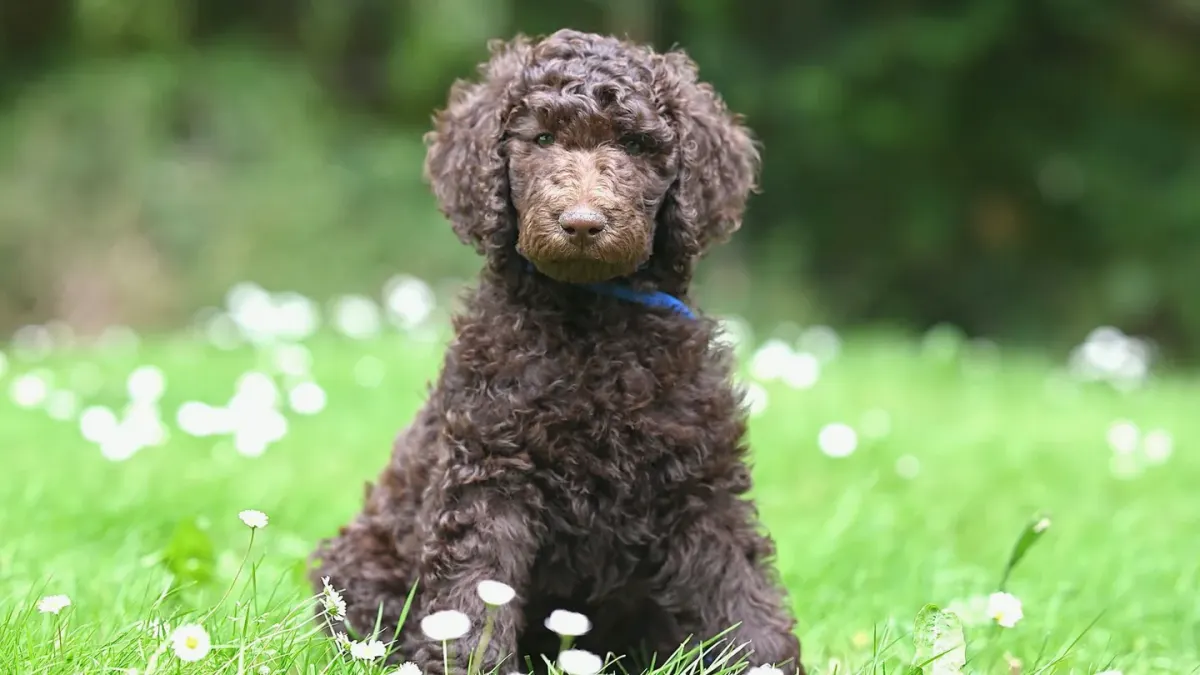
The American Kennel Club: Poodle breed has been standardized for well over a century, originally developed as a water retriever, which is part of why the coat behaves the way it does — dense, curly, and low-shedding by breed type rather than by chance. Because Poodle-to-Poodle breeding has been going on for generations under a fixed standard, a reputable breeder can tell you with real confidence what an eight-week-old puppy will look and act like at two years old: coat texture, adult size within the toy, miniature, or standard variety, and a temperament profile that leans intelligent, biddable, and food-motivated. That predictability is the entire point of a breed standard, and it’s the single biggest thing you give up when you cross to a doodle.
Health-wise, Poodles are not risk-free — hip dysplasia, progressive retinal atrophy, and Addison’s disease all show up in the breed at rates worth screening for — but those risks are documented and testable. A responsible Poodle breeder can hand you OFA hip scores and eye clearances on both parents. You know what you’re screening against.
Where doodles genuinely deliver, and where the marketing outruns the biology
In my practice, the doodle owners I see fall into two camps: the ones whose dog turned out exactly as promised, and the ones who are managing a coat, a shedding pattern, or an energy level nobody prepared them for. Both camps bought from breeders who used the word “hypoallergenic.” A large comparative study in PLOS One looked at physical health outcomes in designer-crossbreeds — Cockapoos, Labradoodles, and Cavapoos — against their purebred parent breeds, and the picture wasn’t the clean “hybrid vigor” win the marketing implies; some health measures favored the crosses and some didn’t, and the researchers were candid that the evidence for a strong, consistent hybrid-vigor effect in dogs is limited. That’s the honest state of the science, and I don’t think owners get told that often enough.
Coat outcome comes down to three specific genes a litter inherits from its Poodle and non-Poodle parent, and the furnishings gene in particular determines whether a puppy grows the facial hair and low-shedding coat people are paying for. A first-generation (F1) doodle — one Poodle parent, one non-Poodle parent — can land anywhere on that spectrum, from a wavy, minimally-shedding coat to something that sheds close to the non-Poodle parent breed. Later-generation doodles bred back toward Poodle (often labeled F1B or F2B) get more predictable, but “more predictable” is not the same as “guaranteed,” and a breeder who doesn’t DNA-test for those coat genes is guessing along with you.
The counterargument I hear, and why I still don’t fully buy it
The strongest case for doodles is real: crossing two distinct gene pools does lower the odds that a puppy inherits two copies of the same recessive disease allele, which is the actual mechanism behind hybrid vigor, and for a handful of breed-specific conditions that logic holds up. I’ve watched doodle owners get a genuinely easier, lower-shedding dog than either parent breed would predict. But that benefit is strongest in true first-generation crosses from two well-screened, unrelated purebred parents — and it erodes with every subsequent generation bred doodle-to-doodle, which is exactly how most “multigenerational” doodles on the market are actually produced. A doodle from two health-tested parents and a breeder who screens for the coat genes is a defensible choice. A doodle from an unscreened backyard pairing sold on the word “hypoallergenic” alone is a gamble wearing a designer name.
What I actually tell owners choosing between them
If predictability matters most to you — you know exactly what size dog, what coat maintenance, and what temperament you’re managing for the next decade — a purebred Poodle from a health-tested breeder is the lower-risk choice, and it’s usually the one I steer first-time large-breed owners toward if allergies aren’t a driving concern. If you specifically want a family-dog temperament crossed with Poodle-type coat traits, a doodle can absolutely work, but only from a breeder who can show you OFA or equivalent health clearances on both parent breeds and, ideally, coat-gene testing on the litter. Ask for that paperwork before you ask about price.
If you’re comparing sizes rather than breeds outright, our guide to Toy Poodle vs Miniature Poodle walks through which size actually fits a given household, and if you’re choosing between the two most common doodle crosses specifically, see Labradoodle vs Goldendoodle. For the shedding question in more depth, Do Goldendoodles Really Not Shed? covers the gene-by-gene mechanics.
I had a follow-up visit with that goldendoodle owner around month four. Her puppy had thrown a wavy, moderately-shedding coat — not the tight curl she’d been shown in the litter photos, and not what she’d budgeted grooming time for. Nothing was wrong with the dog. It just wasn’t the guaranteed outcome she thought she’d paid for, and that gap between expectation and biology is the whole doodle-versus-Poodle question in miniature. So before you fall for a coat photo or a breed name, ask yourself: what are you actually being promised, and who’s standing behind it if it doesn’t turn out that way?
Frequently asked questions
Are doodles healthier than purebred Poodles because of hybrid vigor?
Sometimes, but the effect is inconsistent. A PLOS One comparison of designer-crossbreeds against their purebred parent breeds found the evidence for a strong, reliable hybrid-vigor benefit was limited, with outcomes varying by health measure rather than uniformly favoring the crosses.
Is a first-generation doodle more or less predictable than a multigenerational one?
Less predictable in coat and shedding outcome, though later generations bred back toward Poodle do become more consistent. Neither is fully guaranteed without coat-gene testing on the parents.