Freeze-Dried vs. Powder Supplements for Dogs: Which Format Actually Holds Up?
Freeze-dried and powder dog supplements differ less in ingredients than in how much potency survives the trip from jar to bowl.

On this page
Why does one jar of the same NAD+ precursor need refrigeration while another sits on the pantry shelf for a year? I get this question at least once a week, usually from an owner holding two containers side by side, squinting at the fine print.
Verdict up front: for most dogs, a well-formulated powder is the more practical choice, and freeze-dried is worth the added cost mainly when the active ingredient is fragile — live probiotic strains, certain enzymes, or anything that degrades with heat and moisture exposure. Weigh the cost and the access before the ideal. A supplement you can afford, store correctly, and actually give every day beats a theoretically superior one gathering dust because the format didn’t fit your life.
What “freeze-dried” and “powder” actually mean
Both terms describe how an ingredient reaches its final, shelf-stable form, not what’s in it. Freeze-drying (lyophilization) freezes the raw material, then pulls the water out under vacuum through sublimation — ice going straight to vapor without passing through a liquid phase. That process removes a large share of the moisture content, which is why freeze-dried products tend to hold structure and integrity longer than material dried with heat, according to Freeze-Dried Food For Dogs: The Pros and Cons from PetMD. A powder supplement, by contrast, might be freeze-dried material that’s then ground fine, or it might be a blend that was spray-dried, milled, or simply mixed as dry ingredients from the start. “Powder” is a delivery format; “freeze-dried” is a processing method. They overlap more often than owners assume.
Where the science actually favors freeze-drying
The strongest, most specific evidence for freeze-drying’s advantage sits with live microorganisms — probiotics. Research on freeze-dried Lactobacillus strains found that with the right protective agents (trehalose, whey protein, and similar cryoprotectants), viability held essentially unchanged across five months of refrigerated storage, per a stability study on PMC (National Institutes of Health): Impact of Protectants on the Storage Stability of Freeze-Dried Probiotic Lactobacillus Plantarum. Without a cryoprotectant, though, survival rates dropped sharply — meaning the freeze-drying label alone doesn’t guarantee a stable product. The formulation behind the drying matters as much as the method. This is the honest, un-simplified version of the claim: freeze-drying protects fragile actives well, but only when the manufacturer engineered the process for that ingredient specifically, not as a generic “freeze-dried is better” rule.
The tradeoffs that actually change your decision
I’ve watched this play out with a nine-year-old spayed Labrador named Daisy, whose owner was juggling three different supplements on a fixed income after Daisy’s arthritis diagnosis. She’d noticed Daisy hesitating at the bottom porch step every morning that fall, taking it one paw at a time instead of trotting down like she used to. The owner had picked a freeze-dried joint chew because a clerk told her it was “more potent,” but at nearly double the price of the powder equivalent, she was rationing doses to stretch the jar — cutting chews in half some days. When we recalculated her actual monthly cost against a comparably dosed powder mixed into Daisy’s food, the powder option let her hit full daily dosing consistently for less money. Six weeks later, Daisy was taking the porch steps at a normal pace again. That’s one dog, not a study result, but it’s the tradeoff I see most: potency on paper doesn’t help if the format’s cost forces an owner to underdose.
Powder has its own weak points. Once a canister is opened, exposure to air and ambient moisture starts degrading oxidation-sensitive ingredients like fish oil or certain vitamins faster than a sealed freeze-dried product would, and clumping from humidity can make scooping an accurate dose harder over time. Freeze-dried formats, because they start with so little residual moisture, tend to resist that kind of degradation for longer once opened — one of the few format-specific advantages that isn’t ingredient-dependent.
Palatability, dosing precision, and the parts nobody puts on the label
Powders mix invisibly into wet food, which matters enormously for a picky senior dog who’s started refusing pills or treats. Freeze-dried pieces — often formed as small chews or crumbles — can be more palatable on their own for a dog who’ll eat it like a treat, but that same texture is exactly what a nauseated or appetite-suppressed dog may reject outright. Neither format wins universally; it depends on the dog sitting in front of you.
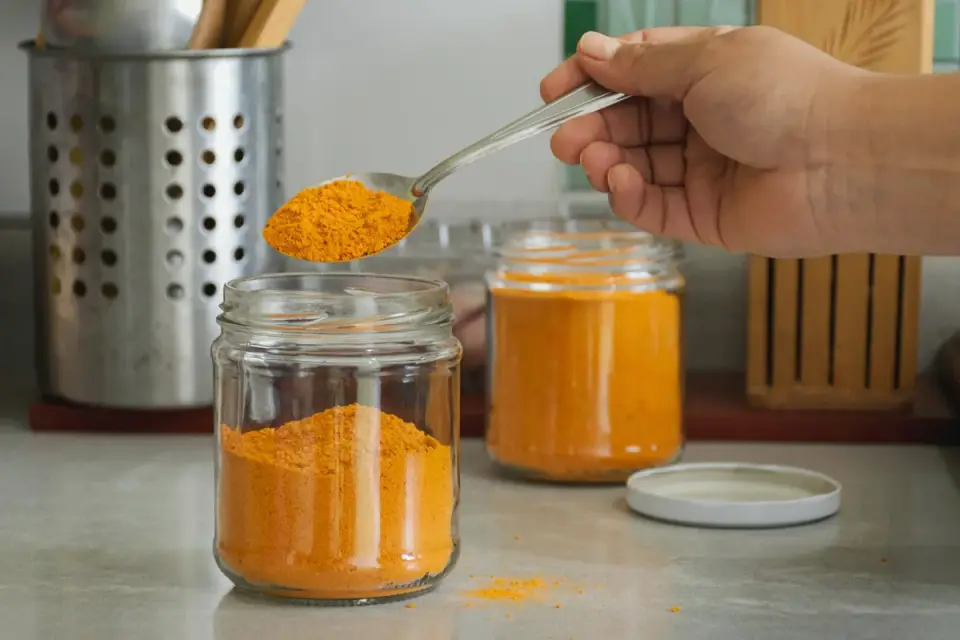
Dosing precision is where powder often loses ground unfairly. A scoop is not a scale, and swelling humidity in a bathroom cabinet can pack a scoop denser on a humid August day than a dry one in January — enough to matter for a small dog on a tight milligram target. If your dog is under 20 pounds and the supplement has a narrow effective dose range, ask whether the product includes a leveled scoop or gram markings, and store the container somewhere dry and cool rather than near the stove or sink.
What I actually tell owners
The strongest counterargument to my own default recommendation is real: for a dog on a probiotic or an enzyme-dependent joint ingredient, a well-engineered freeze-dried product with documented cryoprotectant use can preserve more of what you’re paying for, and that’s worth the premium if you can sustain it. But most owners aren’t choosing between two perfectly matched formulations — they’re choosing between what’s in the budget and what’s on the shelf at the local shop. In my practice, I ask owners three questions before recommending a format: Can you afford the full labeled dose every day, not just some days? Will your dog actually eat it? And does the active ingredient need the extra protection freeze-drying offers, or is it stable either way (as most minerals and many herbal extracts are)? If you’re managing a broader mix of aging-related supplements, our guide to senior dog slowing down walks through which categories tend to matter most as dogs get older, and if a probiotic is part of the plan, our comparison of prescription vs. over-the-counter probiotics covers strain survivability in more depth.
Quality manufacturing matters more than format in the end. Whichever you choose, look for a product carrying the What is NASC? (National Animal Supplement Council): What is NASC? seal from the National Animal Supplement Council, which requires third-party audits of manufacturing practices and ingredient testing regardless of whether the product is freeze-dried or powdered. That seal tells you more about whether the label matches the jar than the drying method ever will.
In brief: powder wins on cost and daily-use practicality for most stable ingredients; freeze-dried earns its premium mainly for fragile actives like live probiotics, and only when the manufacturer has actually engineered for that stability rather than just marketing the word.
Frequently asked questions
Is freeze-dried always more potent than powder?
No. Potency depends on the specific ingredient and how the manufacturer engineered the drying and storage process, not on the format label alone. Some powders are just as stable as freeze-dried versions for non-fragile ingredients like minerals.
Does freeze-dried need refrigeration?
Most properly packaged freeze-dried supplements don't require refrigeration before opening, though some probiotic products specify cold storage after opening to protect live cultures — check the label.
Sources
- Freeze-Dried Food For Dogs: The Pros and Cons — PetMD
- What is NASC? (National Animal Supplement Council) — PetMD
- Impact of Protectants on the Storage Stability of Freeze-Dried Probiotic Lactobacillus Plantarum — PMC (National Institutes of Health)