German Shepherd vs Belgian Malinois: The Longevity Case for Which Dog Ages Better
German shepherd vs Belgian Malinois is really a question of which skeleton and nervous system holds up longer past age seven.
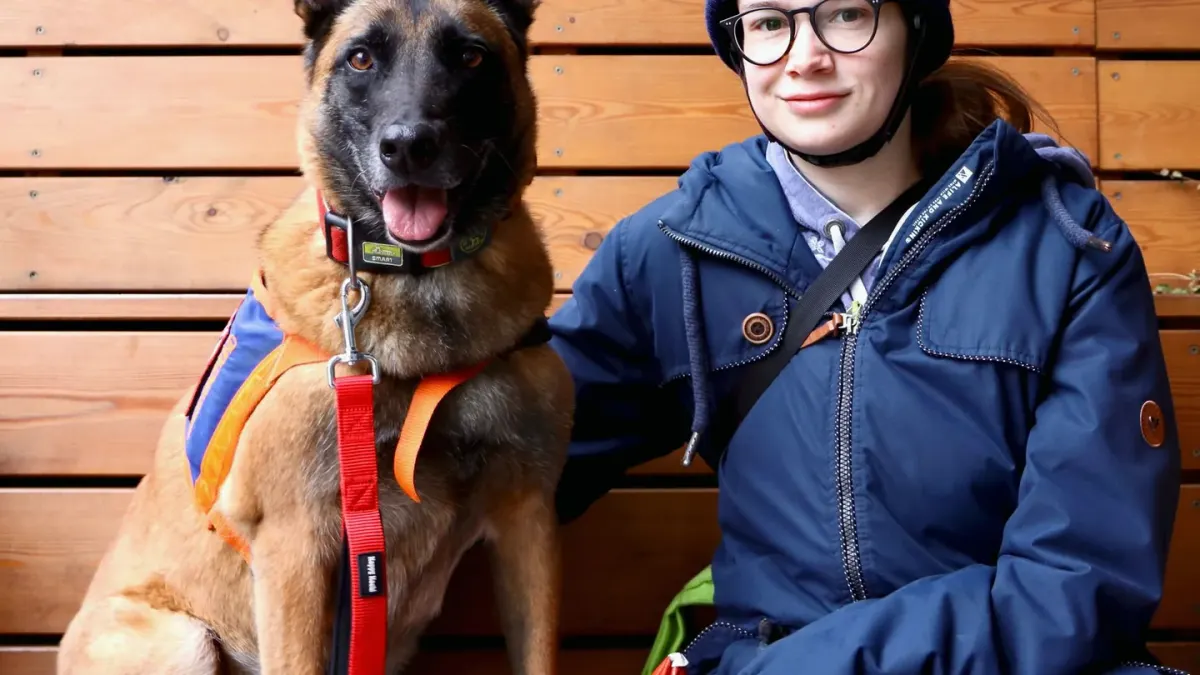
On this page
Quick-scan comparison for owners weighing the two breeds into their senior years:
- Hip health: German Shepherds carry a well-documented, heritable hip dysplasia burden; Malinois tend to run leaner and lighter-boned, which shows up in fewer early mobility complaints.
- Neurologic risk: Degenerative myelopathy is the GSD’s signature aging threat; the SOD1 mutation linked to it has also been found circulating in Belgian Malinois lines, so neither breed gets a pass.
- Lifespan: Malinois owners report more dogs reaching the mid-teens; GSDs, especially heavier show-line dogs, more often show mobility decline by 7-8.
- Body composition: A GSD’s sloped topline and heavier frame load the hips and stifles differently than a Malinois’s squarer, lighter structure.
- What actually moves the needle: weight management, joint-support nutrition, and catching gait changes early — not breed choice alone.
I have sat on exam room floors with both breeds more times than I can count, and the honest answer is that breed is a starting probability, not a verdict. A well-built, lean Malinois can develop crippling arthritis by nine. A heavy-boned show-line German Shepherd can move like a much younger dog at eleven if his owner started weight and joint management early. What the data does tell us is which failure points to watch for, and when.
The scene that keeps repeating in my exam room
A client brought in her German Shepherd, Ruger, at age seven — sixty-eight pounds, deep chest, that classic sloped topline you see in American show lines. She’d noticed him hesitating before jumping into the back of her SUV for about three weeks, and he’d started “bunny hopping” up the porch steps instead of taking them one at a time. It was late fall, cold mornings, and he was stiffest in the first ten minutes after waking up on the tile floor of her kitchen. Radiographs showed moderate bilateral hip dysplasia with early secondary arthritis — not a shock, given the breed and his build. What struck me was the timeline: his mother had shown the same bunny-hop gait at almost exactly the same age. That’s not a coincidence I can cite as data, but it’s a pattern I’ve watched recur across enough German Shepherd families that I start hip screening conversations earlier with this breed than almost any other.
Why the hips diverge between these two breeds
Genetically, German Shepherds and Belgian Malinois are both herding-type working dogs, but they were shaped by very different breeding priorities. American show-line German Shepherds have been selected partly for a sloped topline and angulated rear, a structural choice that shifts load onto the hip joints in a way many veterinary orthopedists consider a contributing factor to the breed’s hip dysplasia burden. Research on Heritability and Phenotypic Variation of Canine Hip Dysplasia Radiographic Traits in a Cohort of Australian German Shepherd Dogs found hip dysplasia traits in the breed to be substantially heritable, meaning breeding decisions — not just diet or exercise — materially shape a given dog’s odds.
Belgian Malinois were bred almost exclusively for working ability — police, military, and sport drive — with far less emphasis on a specific silhouette. That functional-first breeding has, anecdotally and in working-dog circles, kept the breed leaner and more moderately angulated, which likely explains why Malinois owners report fewer early mobility complaints than GSD owners of a comparable age. I say “likely” deliberately: breed-specific orthopedic incidence data for Malinois is thinner in the literature than for German Shepherds, and I’d rather flag that gap than overstate a clean number.
Degenerative myelopathy: the risk neither breed escapes
Degenerative myelopathy is the disease German Shepherd owners fear most, and for good reason — it’s the breed most classically associated with the condition, a progressive spinal cord disease that begins with hind-limb weakness and knuckling, typically in dogs over eight. But it is not a German Shepherd–exclusive problem. A study on the Allele and Genotype Frequencies of the SOD1 Gene Polymorphism Associated with Canine Degenerative Myelopathy in Belgian Malinois Dogs in Greece documented the same DM-associated SOD1 mutation circulating in Belgian Malinois populations. Carrying the mutation does not guarantee a dog develops DM, and two copies are generally required for risk, but the finding matters: if you are choosing a Malinois specifically to dodge GSD-associated neurologic disease, that reasoning does not fully hold up.
What I actually tell clients choosing between the two
My honest recommendation, and I say this knowing it will frustrate people hoping for a cleaner answer: pick based on lifestyle fit first, then manage the same handful of aging risks aggressively regardless of which breed you land on. If you want the dog with the somewhat better track record for reaching a full, active mid-teens lifespan and lighter early mobility complaints, the data mildly favors the Malinois. If you want the dog with the longer, better-documented body of veterinary literature to guide your senior-care decisions — because there is simply more research on German Shepherd orthopedic and neurologic aging — the GSD gives you more to work with. Neither breed gets to skip weight management, joint-support nutrition, or a baseline gait assessment starting around age six or seven. I’ve had owners push back on early screening because “he’s not limping yet” — but by the time a dog is visibly limping, the joint has usually been compensating for months. For readers weighing supplement strategy alongside these breed-specific risks, our team has laid out the evidence on hyaluronic acid for dog joints and our broader longevity supplement review for exactly this stage of planning.
Around the same age Ruger started bunny-hopping, I saw a Belgian Malinois named Scout, six years old, forty-two pounds, whose owner ran agility with her every weekend. Scout’s only complaint was a slightly shortened stride after long training sessions, nothing that showed up on film yet. What kept that dog moving well past ten, by the owner’s later reports, wasn’t breed luck — it was that she’d already built weight control, joint support, and rest-day discipline into Scout’s schedule before anything went visibly wrong. That’s the actual lever, more than the breed name on the paperwork.
The bottom line I’d give a client in the room
If forced to bet on which breed ages more gracefully on average, I lean Malinois, mainly on lighter build and a somewhat better longevity track record. But I would never tell a GSD owner that their dog is destined for a hard decline — good weight management, consistent joint-support nutrition, and early gait screening close most of that gap. The counterargument I hear most is “my Malinois is too high-drive to manage into old age comfortably” — and that’s fair; a bored, understimulated senior Malinois can develop its own stress-related health issues that a calmer senior GSD won’t. Match the dog to your actual daily capacity, then manage the aging risks the same way regardless of which breed comes home with you.
Frequently asked questions
Do Belgian Malinois live longer than German Shepherds on average?
Owner-reported and breed-club data generally suggest Malinois skew toward a somewhat longer, more active senior life, though individual outcomes vary widely with weight, genetics, and care.
Can a Belgian Malinois get degenerative myelopathy too?
Yes. The SOD1 mutation associated with degenerative myelopathy has been documented in Belgian Malinois populations, not just German Shepherds, so screening and gait monitoring matter for both breeds.
At what age should I start watching for mobility decline in either breed?
I generally start baseline gait and weight conversations around age six to seven for both breeds, before visible limping appears, since compensation often masks early joint changes.
Sources
- Heritability and Phenotypic Variation of Canine Hip Dysplasia Radiographic Traits in a Cohort of Australian German Shepherd Dogs — National Center for Biotechnology Information
- Allele and Genotype Frequencies of the SOD1 Gene Polymorphism Associated with Canine Degenerative Myelopathy in Belgian Malinois Dogs in Greece — National Center for Biotechnology Information