Shih Tzu vs Lhasa Apso: The Face Shape Difference That Actually Matters
Shih tzu and lhasa apso trace back to the same Tibetan hills, but one breathes through a shorter muzzle than the other, and that single difference shapes almost everything else.
On this page
A client brought in two dogs on the same afternoon last spring — a nine-year-old Shih Tzu named Bao who snored through his exam and a twelve-year-old Lhasa Apso named Miso who trotted in barely winded from the parking lot. Both weighed about fourteen pounds. Both had the same silky double coat pooling over their eyes. The owners, who’d met in the waiting room, spent ten minutes trying to figure out which dog was which breed before I said anything. I get that mix-up constantly, and it’s the reason I want to walk through this comparison the way I would in an exam room rather than a kennel-club glossary.
The verdict, up front: if airway health and heat tolerance matter more to your household — apartment living, a hot climate, an active lifestyle — the Lhasa Apso’s longer muzzle is the safer long-term bet. If a slightly flatter face and a famously affectionate, velcro-dog temperament matter more, the Shih Tzu still makes sense, but you’re taking on real airway and eye-exposure tradeoffs that deserve informed eyes open, not an afterthought.
Same Tibetan lineage, different jobs, different skulls
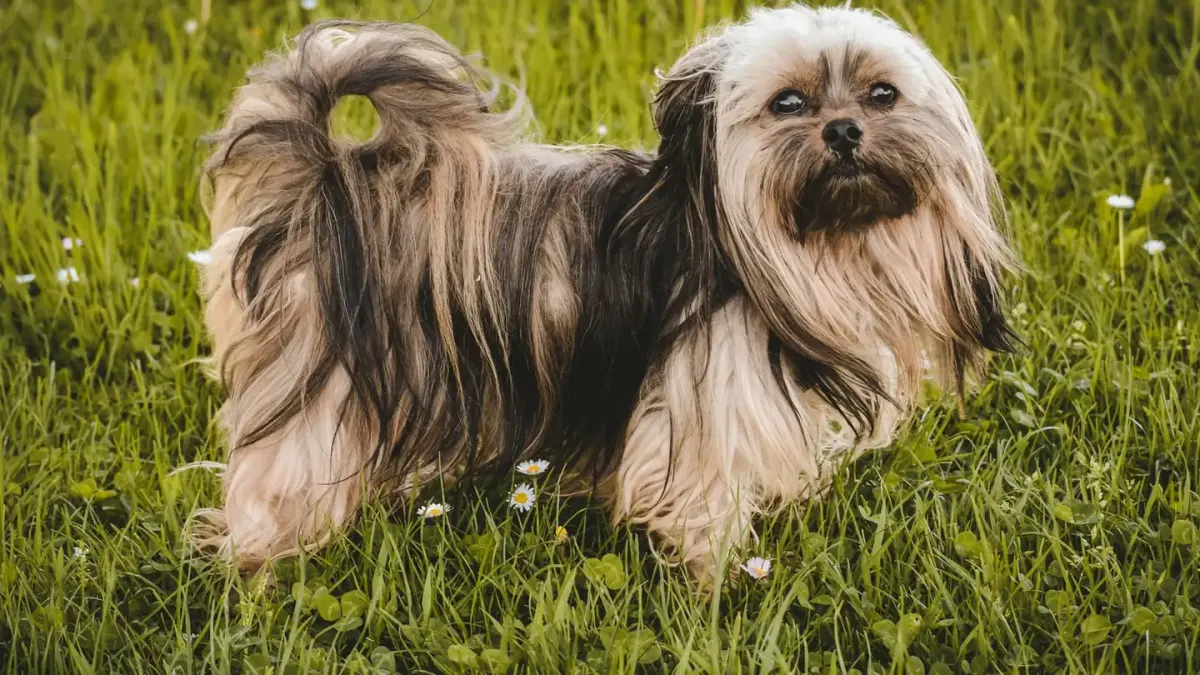
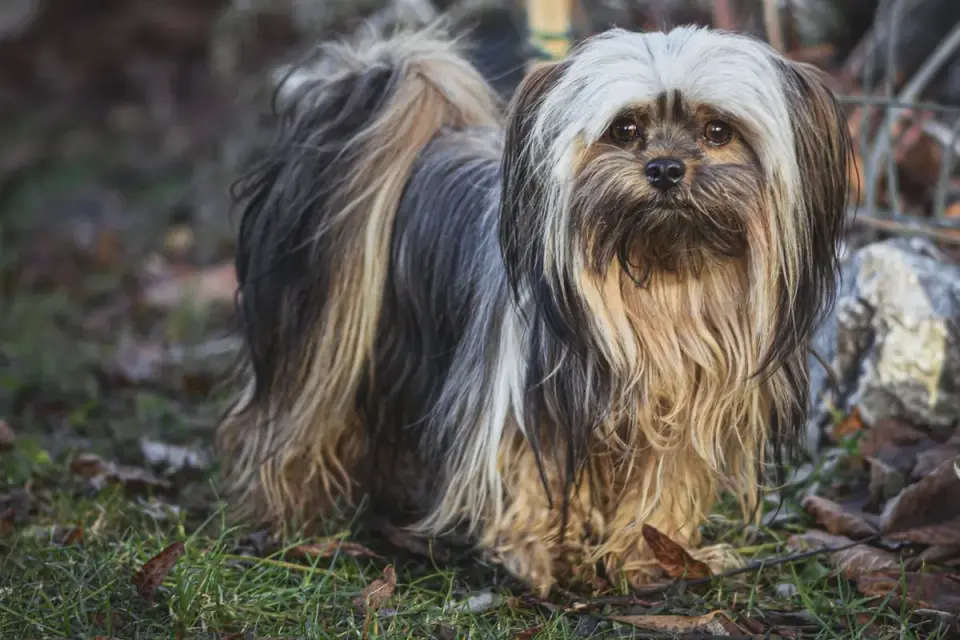
Both breeds descend from small dogs kept in Tibetan monasteries and homes centuries ago, and both were bred primarily as companions rather than working stock — which is part of why owners conflate them. But the skull shape diverged. The Official Standard of the Shih Tzu: Shih Tzu standard calls for a “square, broad head” with a muzzle that’s short and unwrinkled, sitting about one inch from the tip of the nose to the stop — a genuinely brachycephalic, or short-faced, structure. Ideal height at the withers is 9 to 10½ inches, with mature dogs weighing 9 to 16 pounds. The Official Standard for the Lhasa Apso: Lhasa Apso standard, by contrast, describes a narrower skull with a straight foreface, moderate length muzzle, and a nose that isn’t pushed back into the face — closer to mesocephalic proportions. Lhasas typically stand 10 to 11 inches at the shoulder.
That skull difference is not cosmetic trivia. Muzzle length is the single strongest structural predictor of airway obstruction risk in short-faced breeds. A widely cited conformational analysis published in PubMed found that dogs with a shorter craniofacial ratio — muzzle length relative to skull length — carry substantially higher risk of brachycephalic obstructive airway syndrome, the umbrella term for the stertor, exercise intolerance, and heat sensitivity that come with a compressed airway. The Shih Tzu sits meaningfully further along that risk curve than the Lhasa Apso does, even though neither breed is as extreme as a Pug or French Bulldog.

What that airway difference looks like day to day
In my practice, this rarely shows up as a dramatic emergency — it shows up as a pattern owners describe almost identically. Bao’s owner told me he’d started sleeping propped against the arm of the couch instead of flat, because lying flat made his snoring bad enough to wake the household. She’d noticed it worsen over about eight months, alongside him tiring out on the same two-block walk that used to be effortless. None of that is unusual for an aging Shih Tzu; it’s the predictable downstream effect of a shortened airway working harder as soft tissue loses some tone with age. It’s also exactly why I ask Shih Tzu owners, starting around age seven or eight, about snoring changes, exercise tolerance, and any blue-tinged gums after exertion — not to alarm them, but because catching a worsening airway early keeps the options non-surgical for longer.
Lhasa Apso owners bring me a different set of concerns almost entirely — dry eye from the breed’s prominent eyes and heavy facial hair, or skin fold irritation, but I see far less exercise intolerance and open-mouth breathing at rest. That’s the muzzle-length difference translating directly into lived, day-to-day dog behavior, not just a textbook footnote.
Where the breeds actually converge
It would be misleading to make this sound like a clean airway-versus-no-airway split, because both breeds share real risk elsewhere. Both carry a documented predisposition to intervertebral disc disease given their long backs relative to leg length, and both need proactive dental care — small jaws crowd teeth in ways that accelerate periodontal disease if brushing and checkups lapse. Coat care is nearly identical between them too: daily brushing to prevent matting, or a shorter “puppy cut” if daily grooming isn’t realistic for your household. Neither breed is low-maintenance on the grooming front, whatever the coat-color differences suggest at a glance.
Weight matters more than people expect for both breeds. A Shih Tzu or Lhasa Apso even two or three pounds over ideal body condition adds proportionally more joint and airway strain than the same overage would on a fifty-pound dog, simply because of the ratio involved. If you’re weighing how joint-support strategy should shift as either breed ages, our evidence-led review of longevity supplements for senior dogs and our deeper look at whether hyaluronic acid actually helps aging joints are useful next reads — both are written in the same structure/function, evidence-first register as this piece.
I think about Miso, the Lhasa in that same appointment, whenever I counsel a family torn between these two breeds. She was twelve, still climbing onto the exam table without help, still had a full bark when the door opened. Her owner credited none of that to anything exotic — just weight discipline, a dental cleaning every year without fail, and a slower approach to any diet change, since Lhasas can run sensitive-stomached when food is switched too fast. I’ve watched that same pattern play out across a lot of small-breed patients: unglamorous, consistent care outperforms almost anything else you could do for either dog.
The honest tradeoff, and the counterargument I take seriously
The strongest case against prioritizing muzzle length is that most Shih Tzus live full, comfortable lives, and BOAS severity varies enormously by individual — some Shih Tzus never develop clinically significant symptoms at all. That’s a fair point, and I don’t want to overstate the risk into inevitability. But I still land on recommending owners weigh airway structure seriously before choosing between these two breeds, because the difference is measurable, it compounds with age and weight gain, and it’s one of the only variables here you can actually screen for before you bring a dog home — by asking a breeder about the parents’ breathing at rest and exertion, or by having a vet assess airway conformation in a puppy you’re already considering.
If food sensitivity or GI upset comes up as you transition either breed onto a new diet — common with both, given their compact digestive tracts — our guides on switching a dog to raw food without stomach upset and on fiber limits in dogs walk through what’s normal and what’s a signal to call your vet.
Neither breed is the “wrong” choice. They’re both genuinely good companion dogs bred for exactly that role for centuries. But if you’re choosing between them with health trajectory in mind rather than coat color, the muzzle is where I’d tell a client to look first, and the Lhasa Apso’s longer, straighter face is where the evidence — and years of exam-room pattern-matching — points me.
Frequently asked questions
Is a Shih Tzu or Lhasa Apso better for a hot climate?
The Lhasa Apso generally tolerates heat better because its longer muzzle allows more efficient panting and airflow. Shih Tzus, being more brachycephalic, overheat more easily and need closer monitoring during exercise or warm weather.
Do Shih Tzus and Lhasa Apsos have the same temperament?
They differ. Shih Tzus are typically bred as affectionate lap companions with a strong desire to be near their people, while Lhasa Apsos were historically watchdogs and tend to be more independent and reserved with strangers.
Which breed sheds less?
Neither breed sheds heavily — both have hair rather than fur that grows continuously — but both require daily brushing to prevent matting regardless of shedding level.
Sources
- Official Standard of the Shih Tzu — American Kennel Club
- Official Standard for the Lhasa Apso — American Kennel Club
- Impact of Facial Conformation on Canine Health: Brachycephalic Obstructive Airway Syndrome — PubMed