Dog Hind Leg Weakness: What Knuckling, Not Limping, Is Trying to Tell You
Medically reviewed by Karen Inzana, DVM, PhD, DACVIM (Neurology) — For general education — not a substitute for veterinary care.
Hind leg weakness in a dog is a sign, not a diagnosis, and knuckling points elsewhere than a sore hip.

On this page
Picture an eleven-year-old Labrador who used to launch off the back porch steps and now takes them one at a time, pausing on the landing like she’s doing math. Her owner assumes hips — she’s a Lab, she’s old, hips are what Labs get. But watch her walk across the kitchen tile and her back foot tips over at the ankle before she catches it, the top of the paw brushing the floor for half a step. That flick of the paw is not a hip signing off. It’s a nerve pathway losing the thread of where that foot is in space, and it changes the whole conversation.
That’s the trap with rear-limb weakness in dogs: it looks like one problem from across the room and turns out to be one of several once you get down on the floor with the dog. I’m not going to pretend every wobbly senior needs an MRI. But I am going to argue, directly, that you cannot triage this by symptom alone — you have to localize it first, and most owners (reasonably) skip that step and reach for a joint supplement instead.
Start Here: A Five-Point Field Check
Before any diagnosis, these five observations do most of the sorting work, and you can do all of them at home with good lighting and a hallway:
- Watch the top of the paw, not the pace. Does it knuckle under, drag, or scuff the nail on one or both sides? That’s proprioceptive loss, a nervous-system sign.
- Symmetric or one-sided? Even weakness on both back legs suggests a spinal cord or systemic process; one leg worse than the other suggests a focal nerve root or joint problem.
- Sudden or gradual? Hours-to-days onset points toward disc disease or a vascular spinal event; weeks-to-months points toward degenerative or orthopedic disease.
- Painful or not? Crying when picked up, reluctance to be touched along the back, or a hunched posture is a pain sign that changes urgency. Painless progressive weakness is its own pattern.
- Any bladder, tail, or continence change? That signals spinal cord or nerve root involvement and moves the visit from routine to urgent.
None of these five points gives you a diagnosis by itself. Together, they tell your vet where to start looking, which is most of the value of a physical exam anyway.
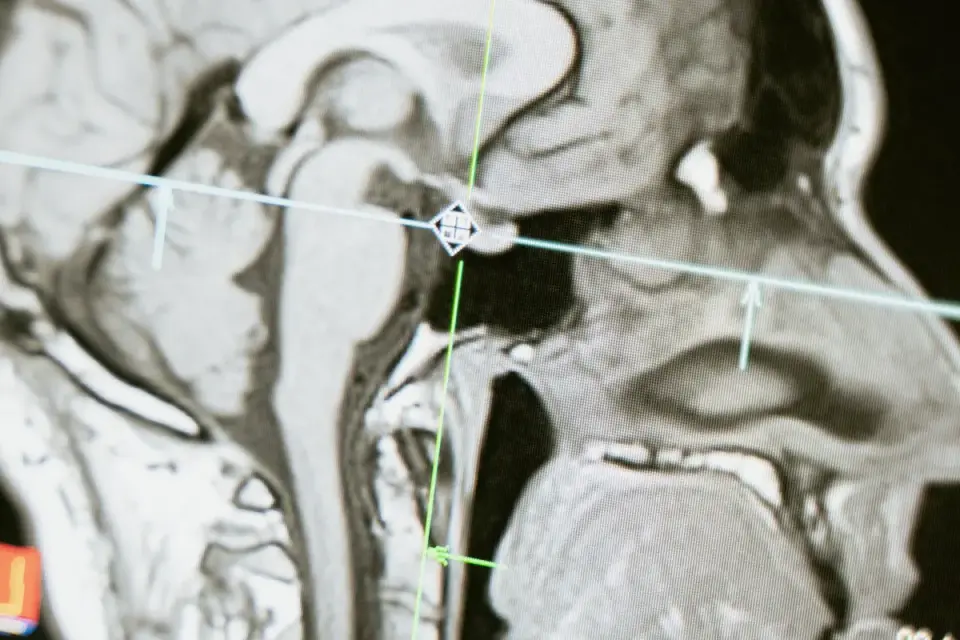
Why Knuckling and a Sore Hip Are Different Problems
A joint problem weakens a leg mechanically: cartilage wears down, the joint hurts to load, and the dog shortens its stride or shifts weight off it. The nerve supply to that leg is intact; the dog knows exactly where its foot is and simply doesn’t want to put weight on it. A spinal cord or nerve root problem does something different. It degrades the signal telling the brain where the paw is and telling the paw what to do next, which is why a dog with degenerative myelopathy or a compressive disc lesion can knuckle over and stand on the top of its foot without seeming to notice, at least at first. That’s a proprioceptive deficit, and it’s a neurologic finding, not an orthopedic one. I try to keep that distinction explicit rather than letting “weak in the back end” cover both, because the two point toward different workups and, frankly, different prognoses.
The Usual Suspects, Ranked by Mechanism
Hip dysplasia and osteoarthritis remain the most common reason an older dog’s rear end weakens, and the mechanism is mechanical: a malformed or worn joint hurts to load, so the dog compensates. OFA notes that hip dysplasia is a polygenic malformation of the hip socket that, left unmanaged, progresses to arthritis and hind-limb lameness — a slow, usually symmetric, pain-driven process.
Degenerative myelopathy works through an entirely different mechanism: progressive death of the long nerve fibers running through the spinal cord’s white matter, associated with a mutation in the SOD1 gene in predisposed breeds. According to Cornell University College of Veterinary Medicine, affected dogs typically start showing signs at eight years or older, with gradual hind-limb incoordination and muscle wasting that begins painlessly and progresses over months, not days. This is the pattern that gets mistaken for “just getting old” — and it’s exactly why the knuckling detail in the field check matters so much.
Intervertebral disc disease is mechanical, but on the spinal cord rather than a joint: a disc bulges or ruptures and compresses the cord or nerve roots. Cornell describes intervertebral disc disease as a common cause of back pain that can produce a wobbly gait, dragging hind legs, or in severe cases sudden paralysis — sometimes within hours of the first sign of pain, which is the urgency that separates it from the slower, painless course of degenerative myelopathy.
Rarer patterns exist too — lumbosacral stenosis compressing nerve roots at the base of the spine, peripheral neuropathies, and fibrocartilaginous embolism causing sudden, usually painless, one-sided weakness after normal activity. I mention these not to alarm anyone, but because “sudden” and “painless” together is its own pattern worth naming to your vet rather than assuming disc disease by default.
A second dog makes the point better than a list does. Imagine a ten-year-old German Shepherd mix treated for “arthritis” for a year, with a joint supplement and an NSAID that helped, some, for a while. On a slow-motion video an owner might take on a phone, both back paws are scuffing the pavement evenly, toenails worn flat on top, with no wince and no change when the hips are manipulated. That combination — symmetric, painless, progressive, worn nails — is the degenerative myelopathy pattern, not the arthritis pattern, and it changes what “supportive care” should actually mean for that dog: physical rehabilitation and mobility aids take priority over another round of joint medication.
Where Supplements Fit, and Where They Don’t
This is where I get opinionated. Antioxidants and joint-support ingredients have a real, evidence-bounded role: they support normal cellular and joint function, which is genuinely useful groundwork in an aging dog, and our senior dog slowing down guide covers where that evidence is strongest. NAD+ precursors are a newer, thinner case, and I’ve written elsewhere about how much weight that early evidence can actually carry for a dog whose energy dropped after turning eight. None of that changes the argument here: supporting normal cellular or joint function is not the same claim as treating a degenerating spinal cord, and I don’t think it’s honest to let a supplement label blur that line for an owner who is scared and looking for something to do. Our longevity supplement review goes deeper on what a well-formulated product can and can’t promise, but the sequencing matters more than the product: diagnose first, then decide what, if anything, supports the plan your vet actually recommends.
What I’d Do Before I Bought Anything
If I had to leave one instruction, it’s this: film the walk, note whether the weakness is even or one-sided, check the tops of the back paws for worn nails, and bring that, not a guess, to the exam. A gait and neurologic exam is quick, inexpensive relative to what comes after, and it tells your vet whether you’re managing a joint, a disc, or a spinal cord — three different plans that happen to look similar from across the kitchen. Everything else, including which supplement earns a place in the routine, follows from that answer instead of substituting for it.
Frequently asked questions
Is hind leg weakness in dogs always arthritis?
No. Arthritis and hip dysplasia are common causes, but weakness can also come from the spinal cord or nerve roots, as in degenerative myelopathy or intervertebral disc disease. Watching for knuckling, dragged nails, or asymmetric onset helps separate the two before you assume it's just the hips.
What is the difference between limping and true weakness?
A limp usually means a dog is avoiding weight-bearing because something hurts. True weakness means the leg isn't generating or coordinating normal movement, even without obvious pain, which is why a hands-on gait and proprioception check matters more than watching speed alone.
Can a supplement fix hind leg weakness?
A supplement can support normal joint or cellular function, but it does not reverse a degenerating spinal cord or correct a malformed hip. Function support is a reasonable add-on after diagnosis, not a substitute for one.
How urgent is sudden hind leg weakness?
Sudden onset, especially with pain, crying when picked up, or loss of bladder control, warrants same-day veterinary attention. Gradual, painless weakness over weeks still deserves a prompt exam, just with less time pressure.
Sources
- Degenerative myelopathy — Cornell University College of Veterinary Medicine
- Intervertebral disc disease — Cornell University College of Veterinary Medicine
- Hip Dysplasia — OFA