Scent Work for Dogs: A Beginner's Guide
Start with three cardboard boxes and a fistful of treats — nose work asks less of a dog's joints than a walk and more of the brain that's still fully intact.
On this page
The first dog I ever watched do formal nose work was a twelve year old Beagle mix named Gus, arthritic in both hips, who could barely manage a fifteen minute leash walk without a limp settling into his back left leg by the second block. His owner had all but given up on giving him “exercise” in any real sense. Then a trainer set three cardboard boxes on the living room floor, dropped a piece of hot dog in one, and let Gus loose. He didn’t limp once. He also didn’t stop for four straight minutes, nose down, tail going, working the room like it was the most important job he’d ever had. That’s the case for nose work in one scene: it is one of the only activities I recommend without reservation to owners of dogs whose bodies are starting to say no, because the sense doing the work — the nose — almost never ages out the way hips and stifles do.
What nose work actually asks of a dog
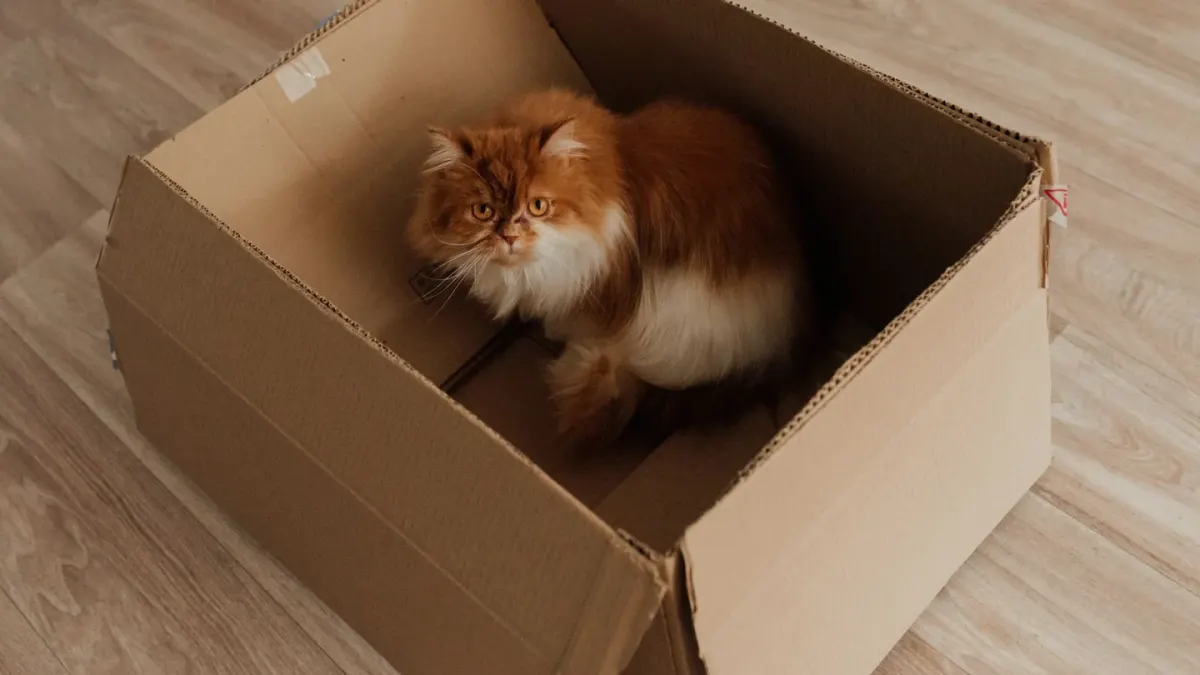
Nose work, sometimes called scent work, is built around a dog’s olfactory search behavior rather than obedience or agility. In its simplest home form it’s a treat or toy hidden in one of several boxes, with the dog rewarded for finding it by scent rather than sight. According to American Kennel Club: AKC, you don’t need formal training to begin — you start by getting your dog excited about using its sense of smell to search for a favorite toy or treat hidden among a few boxes, keeping the first sessions to three to five minutes and ending while the dog is still engaged and successful. As the dog gains skill, handlers introduce a specific target odor and expand the search to a full room or an outdoor area.
That progression matters because it’s genuinely low-barrier. The equipment is a handful of treats and some boxes you probably already have. There’s no leash tension, no repetitive impact, no jumping. For a young, healthy dog it’s a rainy-day activity. For an older dog, or one recovering from an orthopedic issue, it can be one of the only forms of enrichment that doesn’t ask the joints to do anything at all.
Where the evidence actually stands
I want to be direct about what’s proven here and what’s closer to a well-supported hypothesis, because that distinction matters and it’s easy to blur in dog media. A 2019 study covered by trainers in the field found that dogs given two weeks of daily nosework tasks performed better on a cognitive bias test — a proxy for optimism and emotional state — than dogs given traditional obedience training over the same period, a finding tracked in the peer-reviewed literature as ScienceDirect: “Let me sniff! Nosework induces positive judgment bias in pet dogs”. That’s a real, specific, citable result: nosework changed how dogs interpreted an ambiguous cue, in a direction consistent with reduced anxiety. What it does not show is that scent work reverses cognitive decline, treats a diagnosed behavioral disorder, or substitutes for veterinary care in an anxious dog. It shows a measurable shift in judgment bias over a short study window. I’d rather cite that precisely than round it up into something bigger.
The mechanistic story underneath it is plausible and worth explaining rather than hand-waving past. A dog’s olfactory system occupies a disproportionately large share of its brain relative to ours, and sniffing engages regions tied to memory, decision-making, and focus — which is part of why a short scent search can visibly tire a dog out mentally in a way a walk covering the same ground often doesn’t. Preventive Vet frames nose work games as a practical outlet for that instinct, useful for building confidence in shy or reactive dogs and for burning mental energy in dogs whose bodies can’t burn much physical energy. None of that is a cure for anxiety or arthritis. It’s a structure/function argument: the activity supports normal sniffing behavior and gives the brain a job, and that’s a legitimate reason to build it into a dog’s week.
Weighing it against the alternatives
This is where I land as a nutritionist and sports-medicine clinician, not just an enrichment enthusiast: nose work earns its place because it is one of the very few enrichment activities with essentially zero joint cost and a real, if modest, evidence base behind the emotional benefit. Compare it to fetch, agility, or a brisk walk on pavement — all of which load joints repeatedly, and all of which I still recommend for the right dog, but which I have to caveat for a dog with hip dysplasia, elbow arthritis, or a healing cruciate repair. I don’t have to caveat nose work the same way. If you’ve already read our piece on hyaluronic acid and dog joints, you know I’m cautious about overselling joint interventions; nose work is the rare case where the caution runs the other direction — it’s a low-risk activity I’m comfortable recommending broadly, including for dogs on a joint-support protocol who need mental stimulation that doesn’t undo the point of resting a leg.
The honest counterargument is that nose work isn’t a substitute for physical conditioning. A dog that only does scent games and never moves will still lose muscle mass, and muscle around an arthritic joint is doing real mechanical work — supporting the joint, not just burning calories. I’ve had owners tell me they’ve replaced walks entirely with box searches because their dog “seems happier,” and I have to walk that back gently. Nose work belongs alongside appropriate movement, not instead of it, especially for a dog carrying extra weight, since added load on a joint is one of the more controllable variables in a dog’s comfort. It’s a complement to a mobility plan, not the whole plan.
Building a real first session
Set up three or four boxes in a room your dog knows well. Let them watch you place a high-value treat in one box the first few times — you’re teaching the game, not testing them yet. Release them with a cue like “find it” and let them work at their own pace; resist the urge to point or hover. End the session while they’re still succeeding, not after they’ve gotten frustrated or bored, which for most dogs means somewhere in the three-to-five-minute range the AKC recommends. Over a week or two, start hiding the treat without your dog watching, then move the game to a hallway, then a fenced yard. If you want to go further, local scent work clubs and dog training facilities run structured classes, and the sport scales up to real competitive trials with defined search elements if that’s a direction you and your dog enjoy.
I worked with a nine-year-old Cavalier with mild mitral valve disease last year whose owners were trying to keep her engaged without pushing her cardiovascular system. We built her week around two short scent sessions instead of the longer walks she used to do, and within about three weeks her owners reported she was noticeably calmer in the evenings — less pacing, more settling on her bed after a search game than she had been after an equivalent-length walk. That’s one dog’s response, not a study result, and I’m careful never to present it as more than that. But it’s the kind of case that makes the judgment-bias research feel less abstract: a dog with real physical limits still got a job to do with her nose, and it visibly mattered to her.
Where this leaves you
Nose work isn’t a miracle and I’d be doing you a disservice as a nutritionist and sports-medicine clinician if I framed it that way. What it is: a genuinely low-impact, evidence-supported enrichment activity that gives a dog’s brain real work without asking anything of a stiff hip or a healing knee. Start small, keep sessions short, and treat it as one part of a broader plan that still includes appropriate movement for the joints. As more research follows dogs through structured scent programs over longer windows, I expect we’ll get a clearer picture of how much of the benefit is behavioral versus something closer to genuine cognitive conditioning — for now, it’s one of the easiest evidence-backed additions I recommend to almost any dog’s week, senior or otherwise. If joint support is also part of your dog’s plan, our reviews of hyaluronic acid for joints and longevity supplements for senior dogs cover the evidence on the pieces that work alongside it.
Frequently asked questions
How young or old can a dog start nose work?
There's no strict age limit in either direction. Puppies can start as soon as they're motivated by treats, and senior dogs with mobility limits are often especially good candidates because the activity doesn't stress joints.
Do I need to buy special equipment to start?
No. A handful of treats and a few cardboard boxes are enough to start, per the AKC's beginner guidance; specialized odor kits and formal classes are optional next steps if you want to progress toward competitive scent work.
Can nose work replace my dog's daily walk?
Not entirely. It's an excellent low-impact complement, especially for dogs with joint limitations, but movement still matters for muscle mass and weight management, both of which support joint comfort.
Sources
- AKC Scent Work: Get Started — American Kennel Club
- Let me sniff! Nosework induces positive judgment bias in pet dogs — ScienceDirect
- Nose Work: Games and Training Tips for Scent Work — Preventive Vet