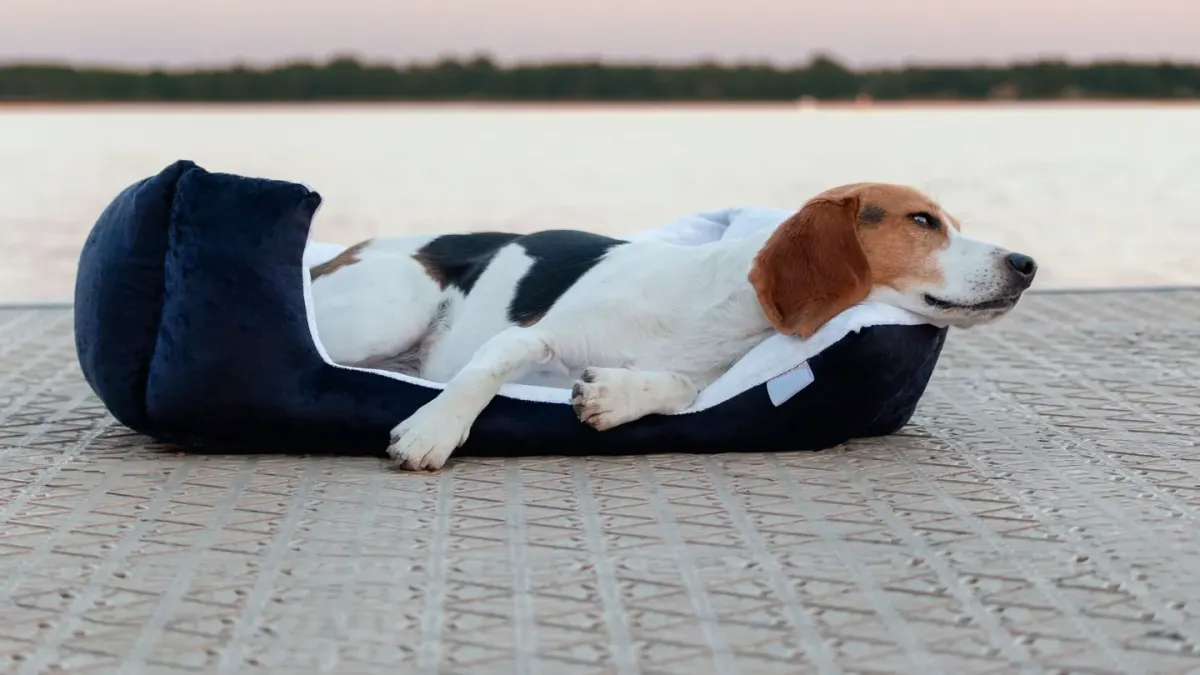
Watch how an old dog rises. A 10-year-old, 68-pound Labrador on laminate flooring pushes his chest up first, pauses with his hind feet tucked, then rocks weight forward to unload stiff hips before his rear legs follow. On our morning route he used to hold a steady 20-minute loop; this February he started sitting down at minute 12 and needed coaxing for the last hill home. That hesitation is biomechanics talking. When push-off hurts or balance wavers, stride shortens, muscle unloads, and the whole dog ages faster. Food therapy, conditioning, acupuncture and careful loading can help support that system, and that is where I place polyphenols — not as joint rebuilders, but as cellular support for tissues working under altered load.
My position is direct: prioritize gait, muscle, and weight first, then use polyphenols only as a low-dose adjunct for oxidative and cellular support in a whole-patient plan for lameness and performance. What would change my mind is a randomized, placebo-controlled trial in geriatric dogs showing improved gait analysis, activity counts, or validated mobility scores from a defined polyphenol dose. Worm and fly longevity data do not do that, and that is why my recommendation stays bounded.
When stride shortens, cells feel it too
Aging cartilage, tendon, and muscle lose mitochondrial efficiency. Mitochondria make less ATP, leak more reactive oxygen species, and trigger inflammatory signaling that makes an already guarded gait stiffer. Polyphenols are plant flavonoids and stilbenes — quercetin from apples and onions, resveratrol from grapes and berries — that interact with those stress pathways.
In laboratory terms, they are not building blocks. They are signaling and antioxidant molecules that may help support normal cellular defense systems. That distinction matters for a dog who compensates by shifting load to the forelimbs, because no capsule restores lost cartilage. What consistent loading, lean body condition, Tui-na, and targeted rehab do is preserve the movement pattern; polyphenols at best help tissues tolerate the metabolic cost of that work.
The comparative biology is humbling. In worms, researchers reported that “QF and unformulated Q, as well as NAC and ascorbic acid, at the concentrations used, did not affect the feeding behavior of the worms” in Pharmaceuticals: A Lecithin-Based Delivery Form of Quercetin Promotes Stress Resistance and Longevity in Caenorhabditis elegans, which tells us formulation changes stress responses in a simple model, not that quercetin improves canine lameness.
Why quercetin and resveratrol get grouped together
Both compounds are studied for immune and cellular support, but through different chemistry. Quercetin in the Linus Pauling Institute Flavonoid Review is described as a flavonol with antioxidant properties that supports cellular signaling, while resveratrol is a stilbene studied for sirtuin and mitochondrial pathways. For deeper background on oxidative mechanisms, the NIH Office of Dietary Supplements Antioxidant Fact Sheet is a measured place to start.
Neither has a canine mobility dose with strong clinical validation. That thinness is central to my caution. I layer modalities into a whole-patient plan for lameness and performance — gait assessment, strength work, acupuncture or chiropractic where indicated, food therapy for weight and gut health — and I will consider a polyphenol-containing food or supplement only after pain is addressed and exercise is graded.
A 13-year-old, 24-pound terrier mix taught me the failed shortcut. Her owner added a concentrated berry-and-grape-skin powder after reading about antioxidants, doubling the scoop for three weeks hoping her bunny-hopping trot would smooth out. Her evening cough did not change, her stair count fell from six climbs a day to three, and her stool softened enough that we stopped everything. The lesson was not that polyphenols are dangerous at food levels; it was that chasing a cellular mechanism while skipping radiographs, weight review, and a lameness exam wastes the window where rehab actually preserves muscle. We restarted with measured walks, incline work, and veterinary pain control, and only then discussed diet-based antioxidants.
Dose context from other species also warns against more-is-better thinking. In fruit flies, “Embryonic exposure to ER50 accelerated pupation and adult emergence but shortened adult lifespan.” reported in Phytomedicine: Resveratrol exerts stage- and sex-specific anti-aging and multigenerational effects via epigenetic and metabolic pathways in Drosophila — a reminder that timing, dose, and life stage flip effects in ways we have not mapped in dogs.
Where I bend the usual movement-first rule
There is one setting where I bring diet antioxidants forward earlier. A 9-year-old, 52-pound Border Collie still working sheep three mornings a week came in sound at a trot but flat in the afternoon, with no lameness I could block and normal bloodwork. The owner tracked 14 training sessions over a month and noted recovery lag stretched from one night to two after hard days. Rather than push more hill repeats, we held conditioning steady, tightened protein and omega-3 intake, added rest days, and kept a food-based polyphenol level where the dog already ate berries and leafy toppers. We did not expect speed. We watched recovery behavior and willingness to load the hind limbs on turns.
That is the exception that proves the hierarchy. I still did not lead with a pill.
If you want to evaluate a formula, look for transparent sourcing, a defined amount of quercetin or resveratrol rather than a proprietary berry dust, no xylitol or excess vitamin D, and a manufacturer that answers questions. Pair it with what actually moves the needle: keep ribs palpable, preserve hind-limb push, and track function. For context on broader aging support, see Senior Dog Slowing Down? The Supplements That Actually Help, and Why and Did Your Dog’s Energy Drop After Turning 8? What NAD+ Precursor Chews Can and Can’t Do. For cognitive overlap, Ginkgo Biloba for Dog Brain Health: What the Evidence Actually Supports weighs a related botanical honestly.
Polyphenols may help support normal defenses against oxidative stress. They do not fix gait.
Frequently asked questions
Do polyphenols rebuild cartilage in aging dogs?
No. They are studied for antioxidant and cellular signaling support, not cartilage regrowth. Preserve mobility with weight control, strength work, and veterinary pain assessment first.
Which polyphenol foods are safe to discuss with my vet?
Small amounts of blueberries, apples without seeds, and cooked leafy greens are commonly discussed. Avoid grapes, raisins, onions, and concentrated extracts unless your veterinarian approves a specific product and dose.
How will I know if a polyphenol supplement is helping?
Track function for 4–6 weeks: rise time, walk duration before sitting, stairs per day, and willingness to play. If gait and activity counts do not change, the plan needs revision, not a higher dose.
Sources
- A Lecithin-Based Delivery Form of Quercetin Promotes Stress Resistance and Longevity in Caenorhabditis elegans — Pharmaceuticals
- Resveratrol exerts stage- and sex-specific anti-aging and multigenerational effects via epigenetic and metabolic pathways in Drosophila — Phytomedicine
- Flavonoids — Linus Pauling Institute
- Antioxidants — NIH Office of Dietary Supplements