Warning Signs a Senior Dog Needs Bloodwork
Medically reviewed by Roger Clemmons, DVM, PhD, DACVIM (Neurology and Neurosurgery), CVA, CVFT — For general education — not a substitute for veterinary care.
If your dog is drinking more, moving stiffer, or just "off" in a way you can't name, bloodwork finds what a hallway exam can't.

On this page
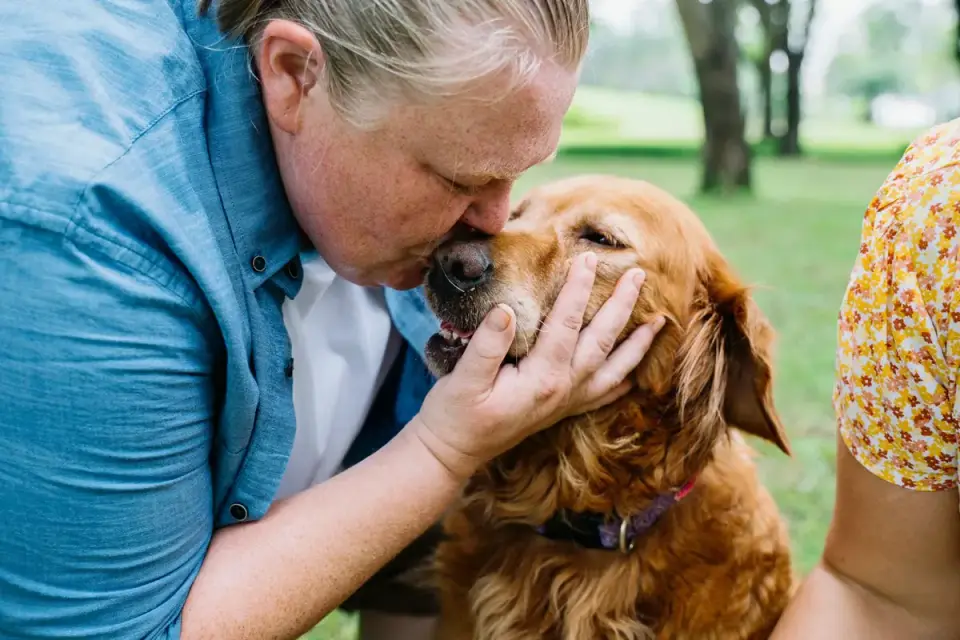
An eleven-year-old Golden Retriever named — well, it doesn’t matter what she’s named — spends most of her afternoon on the cool kitchen tile instead of her usual spot on the porch. Her owner mentions it almost as an aside: she’s drinking more from her bowl lately, maybe twice as much, and at 68 pounds she’s dropped four or five off her frame since spring. Nothing about her limps. Nothing about her looks acutely sick. But something has changed, and the honest answer to “should we run bloodwork” is yes, today, not at the next annual visit.
My verdict, stated plainly: when a senior dog’s routine shifts in more than one small way, I reach for both the imaging study and the acupuncture needle — meaning I want the objective data (a chemistry panel, a CBC, sometimes SDMA) sitting next to the whole-patient exam before I commit to a plan, herbal, pharmaceutical, or otherwise. Bloodwork isn’t a formality tacked onto a senior wellness visit. It’s the only way to see the organs working — or beginning to fail — before the dog’s behavior gives it away.
Why the exam alone under-reads an aging dog
A physical exam is good at catching what’s already visible: a mass, a heart murmur, joint effusion, a dull coat. It is much less good at catching what’s happening at the cellular and biochemical level — the kidney that’s lost a third of its function, the liver enzymes drifting upward, the thyroid quietly slowing down. The AAHA Senior Care Guidelines recommend that dogs over roughly seven years old get a medical workup — complete blood count, chemistry, urinalysis, and screening biomarkers — once or twice a year, and that healthy seniors get baseline wellness screening even when nothing looks wrong on exam. That “even when nothing looks wrong” clause is the whole point. Senior dogs are stoic. They compensate for organ decline for a long time before symptoms surface, and by the time symptoms are obvious, the underlying process is often well established.
I don’t dismiss the exam — hands-on assessment, gait, palpation, and history still shape everything I do next, including whether I layer in acupuncture or food therapy alongside a conventional workup. But treating the exam as sufficient on its own, in a dog past seven or eight, is where I part ways with a wait-and-see approach.
The signs that move me from “watch” to “test”
A handful of changes, alone or especially in combination, are the ones I don’t let ride until the next scheduled checkup:
- Increased thirst or urination. This can signal kidney disease, diabetes, or Addison’s disease, and it’s one of the most reliable early flags a chemistry panel and urinalysis will catch.
- Unexplained weight loss or gain, particularly gradual loss with a normal or increased appetite, which can point toward diabetes, hyperthyroidism, or a chronic inflammatory process.
- Lethargy or new exercise intolerance that doesn’t track with an obvious joint problem — this can point to anemia, infection, or organ dysfunction rather than simple arthritis.
- A change in appetite in either direction, especially picky eating layered on top of weight loss.
- A dull coat, gum color change, or breath that smells subtly different — early, easy to miss, and often bloodwork-confirmable before they progress.
None of these on their own is an emergency. Together, or persisting more than a week or two, they’re a pattern worth a prompt visit that includes labs — not a wait-and-see situation, and not something to write off as “just getting older.”
A composite case makes the timeline concrete. Picture a 9-year-old, 22-pound terrier mix whose owner first notices, around week one, that she’s drinking from the toilet more often — a detail owners often mention almost apologetically, as if it’s a behavior problem rather than a medical one. By day 10, the owner has also noticed she’s had two accidents in the house, uncharacteristic for a dog that’s never had one in eight years. That combination — increased thirst plus new incontinence in an otherwise-trained dog — is exactly the pairing that should trigger a chemistry panel and urinalysis rather than a “let’s see how she does” approach, because kidney disease, diabetes, and Cushing’s disease all present this way early, and only bloodwork sorts among them.
Where this gets complicated: the case against over-testing
The honest counterargument deserves airtime, because it’s a real one. Twice-yearly bloodwork on every senior dog, regardless of clinical signs, isn’t free — financially or in terms of the stress some dogs experience at the clinic — and a subset of results come back as incidental, mildly-out-of-range values that generate anxiety without changing management. Some colleagues argue for a leaner, symptom-triggered approach: test when something changes, not on a fixed calendar. I take that concern seriously, and for a genuinely low-anxiety senior dog with no history of chronic disease, I don’t fight hard against annual-only screening.
Where I land, though, is that the AAHA guidelines’ baseline recommendation — a wellness panel once or twice yearly even in healthy seniors — exists because subclinical organ decline is common and slow-moving, and catching chronic kidney disease at an earlier IRIS stage genuinely changes what diet and treatment can accomplish. The IRIS Kidney staging guidelines note that Stage 1 kidney disease often shows no clinical symptoms and can even present with normal standard creatinine, which is precisely why a screening panel — not a symptom-triggered one — is the tool that catches it early enough to matter. I’d rather manage a handful of incidental findings than miss a kidney or thyroid problem in its treatable window.
One further wrinkle worth naming: dogs on long-term herbal or nutraceutical support are not exempt from this logic, and in my experience they’re sometimes more likely to get skipped, because an owner reasonably assumes “she’s on a longevity supplement, she’s covered.” She isn’t. Support for cellular and antioxidant function is not a substitute for knowing what her kidney values, liver enzymes, or thyroid panel actually show.
What the supporting ingredients can and can’t tell you
Ingredients marketed in the senior-dog longevity space are worth understanding on their own mechanistic terms, separate from whether a given dog needs diagnostics. Nicotinamide Riboside is an NAD+ precursor studied for supporting normal cellular function in aging dogs; in one owner-reported dataset, a March 2025 survey of 193 dog owners found 97.8% reported visible improvement after the first jar, with 94% reporting cognitive-function improvement and 98% reporting energy improvement — an owner-reported figure, not a controlled clinical trial. Quercetin is a flavonoid studied for antioxidant, immune, and cellular support properties, and in laboratory research, quercetin and related compounds at the concentrations tested did not affect feeding behavior in the model organism studied, according to a study published in Pharmaceuticals. Resveratrol is likewise studied as an antioxidant supporting cellular health, though embryonic exposure to a related resveratrol-class compound in laboratory research accelerated development but shortened adult lifespan in the organism tested, per research in Phytomedicine — a reminder that dose and life stage matter even for compounds generally regarded as supportive, and that early-stage or in-vitro findings shouldn’t be read as settled dog-specific conclusions.
None of that changes the recommendation in this article. A supplement, however well-supported mechanistically, doesn’t reveal a rising BUN or a falling white count. Only a blood panel does that.
Applying this at home
If your dog is past seven or eight and any of the signs above have shown up in the last month, book bloodwork rather than waiting for the annual exam to roll around. If she’s a healthy senior with no red flags, twice-yearly baseline screening — per the AAHA guidelines above — is still the more defensible default over skipping it, given how quietly organ decline tends to progress. For related reading on what a slowdown in an aging dog can mean beyond bloodwork, see our guide to senior dogs that are slowing down and which supplements actually help, our explainer on hind-leg weakness and knuckling, and our piece on what to do when a dog’s energy drops after turning eight.
Next step: if you’ve noticed even one of these changes, don’t wait for the next scheduled visit — call and ask specifically for a chemistry panel, CBC, and urinalysis. That’s the data point that turns a vague worry into an actionable plan.
Frequently asked questions
How often should a senior dog get bloodwork?
Most veterinary guidelines, including the AAHA Senior Care Guidelines, recommend a wellness panel — CBC, chemistry, and urinalysis — once or twice a year for dogs past roughly seven years old, even when they appear healthy, because organ decline is often subclinical in its early stages.
Can a dog have kidney disease with normal bloodwork?
Early-stage kidney disease can sometimes show a normal standard creatinine, which is why newer markers like SDMA are used alongside creatinine to catch decline sooner, per IRIS staging guidance.
Is increased thirst always a sign of a problem in an older dog?
Not always, but persistent increased thirst or urination in a senior dog is one of the more reliable signals worth a bloodwork-backed visit, since it's associated with kidney disease, diabetes, and Cushing's disease.
Sources
- Evaluating the Healthy Senior Pet — AAHA
- IRIS Guidelines — IRIS Kidney
- Antifeedant and Antioxidant Activity of Quercetin Formulations — Pharmaceuticals
- Embryonic Exposure Effects on Lifespan — Phytomedicine