On this page
Picture bath time on a Saturday afternoon, the kind every dog owner knows. An 18-month-old Labrador mix, 62 pounds of wet coat and relief, is toweled off in the hallway and suddenly launches. He ricochets from rug to couch to hallway, ears pinned, eyes bright, sliding on the turn, then flops on his side panting after about 90 seconds. His owner stands with the damp towel, wondering whether to chase him, crate him, or laugh. That decision — manage the space or try to suppress the sprint — is the whole appointment in miniature.
My verdict in the exam room: normal discharge, not a diagnosis
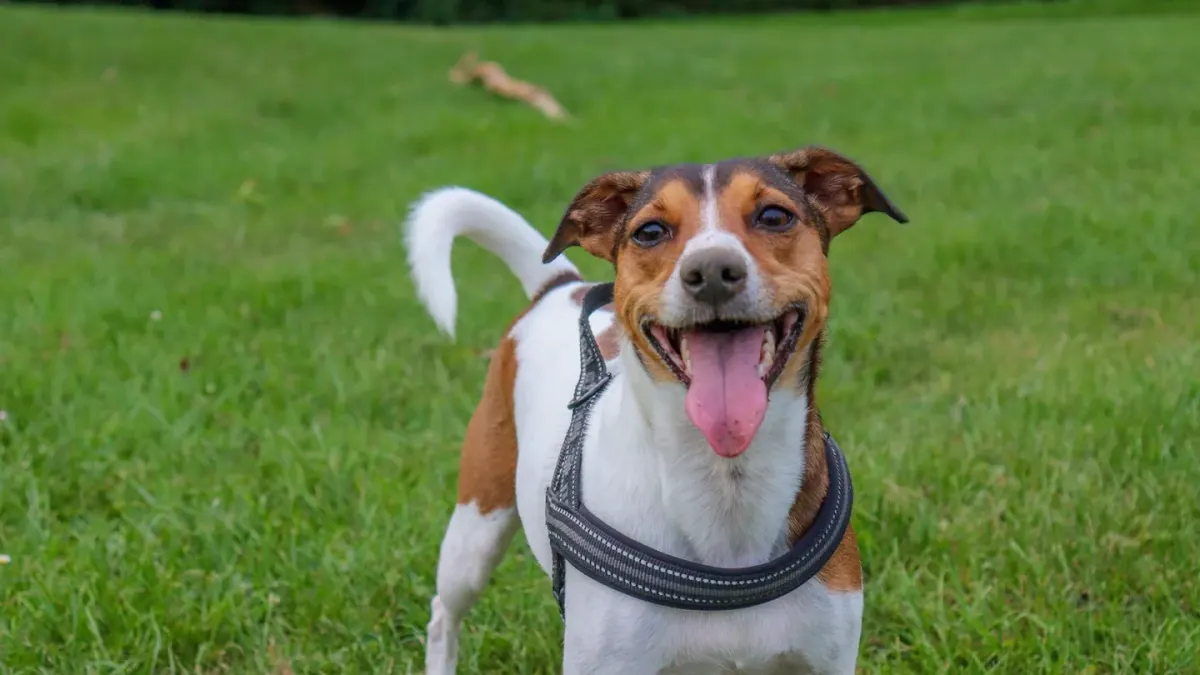
Veterinarians call this a frenetic random activity period, or FRAP. It is a short, intense burst of running, spinning, play-bowing, and sliding that comes out of rest, confinement, excitement, or a transition like a bath, bowel movement, or greeting.
My expectation-first counsel is simple: plan for safe expression rather than elimination. Give a predictable daily baseline of sleep, sniffing walks, play, and training, puppy-proof the sprint path, and let a normal episode burn out.
That release is normal.
The strongest counterargument I hear is that daily zoomies must mean the dog is under-exercised and needs a much bigger workout plus something calming to take the edge off. More movement can help a bored adolescent, but chasing exhaustion often backfires, and I still land on management first because FRAPs are about arousal regulation, not just mileage. For context on arousal that looks like play, see how I sort play signals from early conflict.
What is actually happening in the body during a FRAP
Think of arousal like a pressure curve. Rest, crating, bathing, or focused excitement raises sympathetic tone. Movement then discharges it. That is why zoomies cluster around wake-ups, post-bath shakes, post-defecation sprints, evening witching hours in puppies, and reunions at the door.
There is no single zoomies hormone to fix. Sleep pressure, age, breed tendencies for locomotor play, gastrointestinal comfort, skin sensation after water, and learned household patterns all feed into the same circuit. In longevity terms, this is efficient mitochondrial output and musculoskeletal elasticity doing exactly what young tissue does well: recruit fast-twitch fibers, turn sharply, stop hard, and recover quickly.
A tired herding-breed adolescent kept in an apartment through a rainy week will often FRAP harder than a senior retriever with stiff hips, and neither pattern alone diagnoses anxiety. If baseline worry is part of your dog’s picture, my framework for telling reactivity apart from aggression helps keep labels clean.
What a textbook episode looks like
Most normal episodes share a rhythm. A trigger, a sudden start, wide fast loops with loose wiggly body language, maybe a play bow or happy bark, then a fairly abrupt stop with panting and a shake-off. The whole sequence often lasts one to three minutes. The dog remains responsive to the environment, avoids crashing into people when possible, and returns to normal behavior afterward.
I tried to outrun this pattern with one family and a 4-year-old, 38-pound cattle-dog mix who FRAPed nightly at 8 p.m. For three weeks in a row they added a 45-minute chuck-it session after dinner to tire him out, expecting the laps to fade by day 10. Instead the panting lasted longer, the turns got sloppier, and he started mouthing sleeves on the final lap. What changed was not fitness but recovery: he was going into the evening already over-tired and over-aroused. We cut the late fetch, moved a sniffy decompression walk earlier, and kept the hallway rug down as a runway.
That tradeoff is common. For mouthing that spikes when arousal spikes, the same redirect-then-remove approach I use for puppy biting and mouthing works better than adding more fetch.
Supplements come up here a lot, and I want to be candid about what is proven versus promising. Calming herbs are often marketed to smooth hyper moments, yet as summarized in a review published by MDPI, “For the remaining species, evidence is derived mainly from preclinical studies or traditional use.” For ashwagandha, a review published by Cureus found “A systematic review analyzed multiple RCTs and concluded that ashwagandha has a moderate positive impact on stress reduction and cognitive performance.” That conclusion does not translate directly to dogs who FRAP after a bath. The L-theanine literature is similarly narrow for this use, with one synthesis noting “except for one study on psychotic anxiety (SMD = 0.54; 400 mg/day for 8 weeks)” in work published by Nature Portfolio. In plain English: interesting biology, thin application to zoomies.
When zoomies stop being just zoomies
Call your veterinarian promptly if the pattern changes. I worry less about speed and more about context.
Seek care this week for sudden onset in a senior dog, episodes paired with limping, slipping, head pressing, circling in one direction, collapse, heavy prolonged panting, or disorientation, zoomies that interrupt sleep with vocalizing or seem impossible to interrupt, new aggression, growling, or snapping during or right after the run, or gastrointestinal signs, itching, pain on handling, or urinary changes around the episodes. A video of the full minute before, during, and after helps more than any description. If handling around these moments triggers a growl, use my guide to growling when petted while you wait for the visit.
An edge case reshaped how I triage this. An 11-year-old, 48-pound mixed breed who had been stiff on stairs for two months suddenly started a nightly full-speed lap at 9 p.m., which was new. By night four she clipped a chair and sat down hard, then licked her right carpus for several minutes. Radiographs later showed advanced carpal arthritis plus a fresh sprain. The sprint was not renewed youth; pain, cognitive change, and a disrupted sleep-wake cycle had lowered her impulse control. Older dogs deserve a medical baseline before we call anything just the zoomies.
A calmer house without punishing the sprint
Keep it preventive and realistic over two to four weeks. Clear a consistent runway away from stairs, glass, and toddlers. Put down traction rugs on slick turns. Keep collars snug and doors latched. Cue a sit or scatter a few kibbles before you open the crate or back door so the launch has a half-second of thinking. Reward a settle on a mat after the shake-off to support recovery.
Do not chase, scream, grab at the collar mid-loop, or use the crate as punishment. Punishment does not make arousal disappear.
It teaches the dog to sprint away from you. If you need hands-on help sorting excitement from fear or frustration, a credentialed professional matters — here is how to choose among a trainer, behaviorist, or veterinary behaviorist.
For related context, read Why Does My Dog Growl When I Pet Him? Causes and What To Do.
For related context, read How to Stop Puppy Biting and Mouthing (Without Losing the Bond).
Frequently asked questions
Are dog zoomies normal?
In most puppies and young adult dogs, yes. Brief, loose-bodied sprints after rest, baths, poops, or greetings that end with normal behavior are typical FRAPs.
How long should zoomies last?
Many last one to three minutes. Longer episodes with prolonged panting, inability to settle, or repeated injury deserve a veterinary check.
Should I stop my dog's zoomies?
Do not punish. Manage the space for traction and clearance, give daily sleep, sniffing, play, and training, and redirect the launch with a sit or food scatter.
When are zoomies an emergency?
Call promptly for collapse, disorientation, one-direction circling, sudden aggression, limping, or a sharp behavior change in a senior dog.
Sources
- Biomedicines herbal review — MDPI
- Cureus ashwagandha review — Cureus
- Molecular Psychiatry L-theanine review — Nature Portfolio