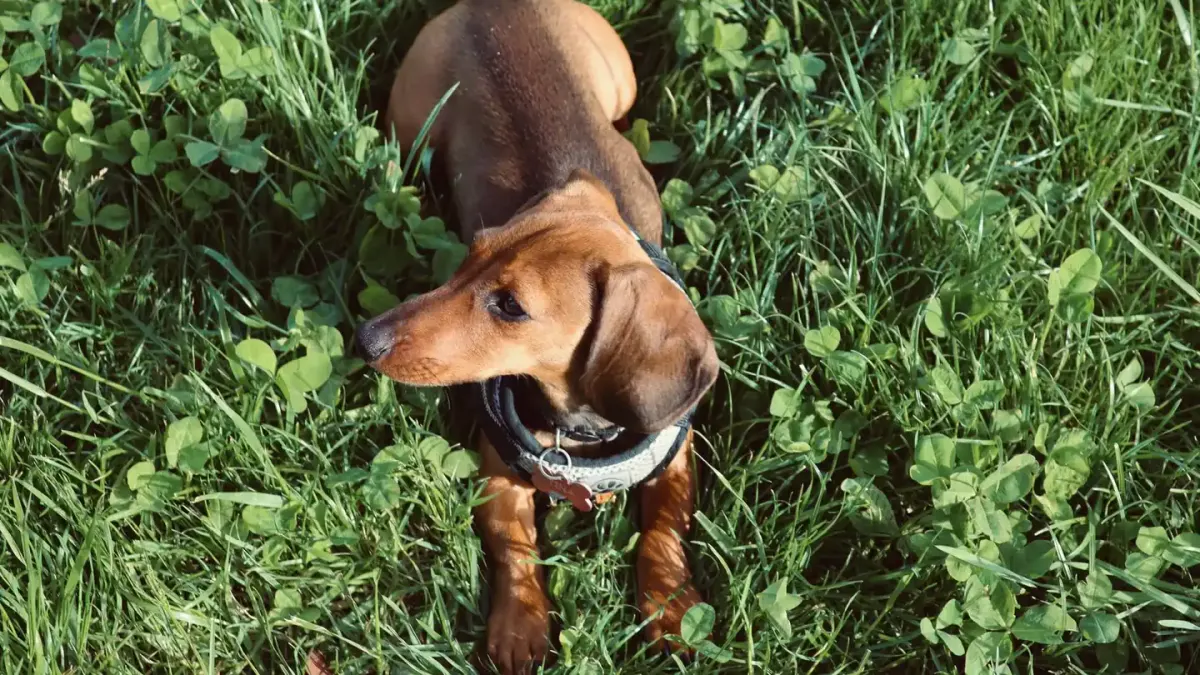
She stood over the overturned puzzle with her shoulders tight, worried she had bought the wrong thing for comfort. Her six-year-old, 48-pound mixed-breed dog had nosed the sliding blocks twice, pawed hard, then picked up the whole board and shook it until kibble scattered across the kitchen tile. In the exam room she asked quietly whether this meant her dog was anxious, bored, or simply too rough for enrichment. That worry is familiar, and it is worth taking seriously, because destruction is rarely about disobedience. It is usually a dog telling us the puzzle asked for the wrong kind of effort, at the wrong difficulty, for that particular brain and body on that day.
For most adult dogs, I find the kindest interpretation holds up best: chewing through a puzzle is a foraging strategy when nosing and pawing did not work. The American Veterinary Society of Animal Behavior describes problem behaviors as normal behavioral needs expressed in contexts that do not fit, and puzzle destruction fits that frame well. Dogs evolved to dissect, tear, and shake apart food sources. When a plastic slider does not move as expected, picking it up and chewing it is logical.
Frustration chews differently than curiosity.
Destruction is information, not defiance
A dog who sniffs, licks, nudges, then escalates to biting corners, carrying the toy, or prying lids is showing a sequence, not a character flaw. Low-level persistence looks loose and wiggly, with pauses to sniff and re-approach. Frustration looks stiffer, faster, and louder, with hard pawing, biting at one spot, barking at the toy, or leaving and returning in bursts. The American Kennel Club notes that chewing helps dogs explore texture and relieve arousal, which helps explain why arousal often lands on the toy itself.
What guides my recommendation is this contrast: foraging supports calm engagement, while repeated frustration erodes it. For an aging brain especially, we want wins that maintain curiosity without flooding the nervous system. That means I prioritize fit over toughness. A puzzle that can be solved with nose and tongue in a few minutes supports comfort. A puzzle that requires sustained precision with paws often does not, particularly for seniors, brachycephalic dogs, or dogs with sore mouths, stiff necks, or limited vision.
When a harder puzzle made it worse
Three weeks in, one family tried to solve the shredding by moving up a level. Their ten-year-old, 34-pound spaniel-type dog had been flipping a beginner flip-lid board, so they bought a multi-step sliding puzzle rated for advanced dogs and filled it with small, dry treats that wedged tightly in the tracks. By day 10 the dog stopped sniffing altogether and went straight to chewing the edge, then carried the board to her bed to gnaw alone. The owners worried about resource guarding, but what I saw was a learned shortcut: harder mechanics plus lower-value, harder-to-access food had taught her that dissection paid better than problem-solving. We stepped back to a lick mat and a loosely packed snuffle approach for two weeks, then reintroduced one slow feeder with large, easy-to-lick food. Her engagement softened within days, not because she was outsmarted, but because the task finally matched her mouth and patience.
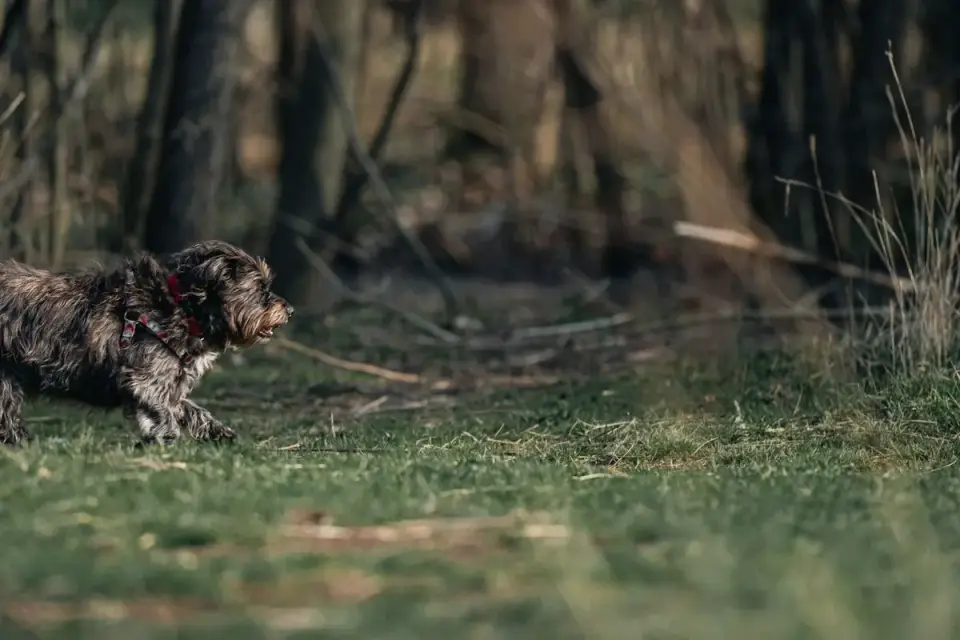
That tradeoff is common. Making a puzzle harder does not teach persistence. It often teaches a dog to skip thinking and go straight to dismantling. If destruction appears within the first minute, the puzzle is usually too hard, too tightly packed, too slippery, or loaded with food the dog does not find worth the work. If destruction appears after calm work, the session may simply have run too long. The Merck Veterinary Manual reminds clinicians that arousal, pain, and unmet exercise or social needs can all surface as destructive behavior, so context matters as much as the toy.
The edge case that changes the plan
A 13-year-old, 11-pound terrier mix came in for quality-of-life support with a new habit his family found embarrassing. For years he had been gentle with food toys, but over two months he began biting and tearing at silicone lids he used to lick cleanly, sometimes dropping food and walking away. His family assumed cognitive decline and bought tougher toys. On exam his canines were worn, several incisors were missing, and he turned his head to chew on one side. For him, destruction was not frustration or excess energy. It was oral discomfort and changing vision making licking and precise nosing harder, so biting felt more effective. We paused lidded puzzles entirely, shifted to shallow dishes, soft snuffle fabric, and short scent work for dogs in grass, and referred him for dental assessment. The lesson I carry is to check the mouth, eyes, and joints before blaming motivation, especially when a previously gentle senior suddenly gets rough.
That is also where I part ways with the toughest-toy answer. The strongest counterargument I hear is reasonable: some dogs are power chewers who need indestructible puzzles, and letting them destroy teaches bad habits. There is truth in it. Safety matters, and no dog should ingest plastic, foam, or fabric. Supervision and materials rated for chewing matter.
I still land on fit first, toughness second. A nearly indestructible puzzle at the wrong difficulty still creates frustration, and a frustrated power chewer will chew harder. A well-matched, supervised challenge that ends in eating usually lowers the need to destroy.
For this week, lower the difficulty one full step, use higher-value soft food that comes out easily, and keep sessions short and supervised. Offer sniffing that cannot be broken, like grass sniffing on a walk or a simple cardboard box foraging game with loose paper, alongside one easy puzzle. If your dog has missing teeth or mouth pain, borrow ideas from puzzle feeders for dogs with missing teeth rather than forcing lids and sliders. And if energy is spilling over into every toy, trade some indoor puzzle time for movement and training that fits the body, as in how to tire out a puppy without over-walking their joints.
Destruction is feedback offered in the only language a dog has under arousal. When we make the work winnable, most dogs choose foraging over force.
Frequently asked questions
Should I buy a tougher puzzle if my dog destroys puzzle toys?
Check fit before toughness. Lower the difficulty, use softer high-value food that releases easily, supervise closely, and remove any toy that sheds pieces. Tough materials improve safety but do not resolve frustration on their own.
Is destroying puzzles a sign of anxiety?
It can reflect frustration, over-arousal, boredom, or difficulty mismatch more often than anxiety alone. Look at the sequence, body tension, and context, and talk with your veterinarian if destruction is sudden, intense, or paired with appetite, sleep, or behavior changes.
How do I stop my senior dog from chewing puzzle toys apart?
Make licking and sniffing easier than biting. Use shallow dishes, soft textures, loose packing, and short scent-based games, and have the mouth, eyes, and joints checked if a previously gentle senior suddenly turns rough.
Sources
- Position Statements — American Veterinary Society of Animal Behavior
- Merck Veterinary Manual — Merck Veterinary Manual